General News

East Jerusalem Consulate: Imminent Closure Threatened by Israel

The UK consulate in East Jerusalem is due to close this Thursday, 8 October, unless a diplomatic agreement is reached. The Israeli government and a spokesperson for Gideon Sa’ar say the shutdown follows the announcement of British sanctions against illegal settlements in the occupied West Bank. This development follows recent tensions regarding the status of the mission and the UK's recognition of the State of Palestine.

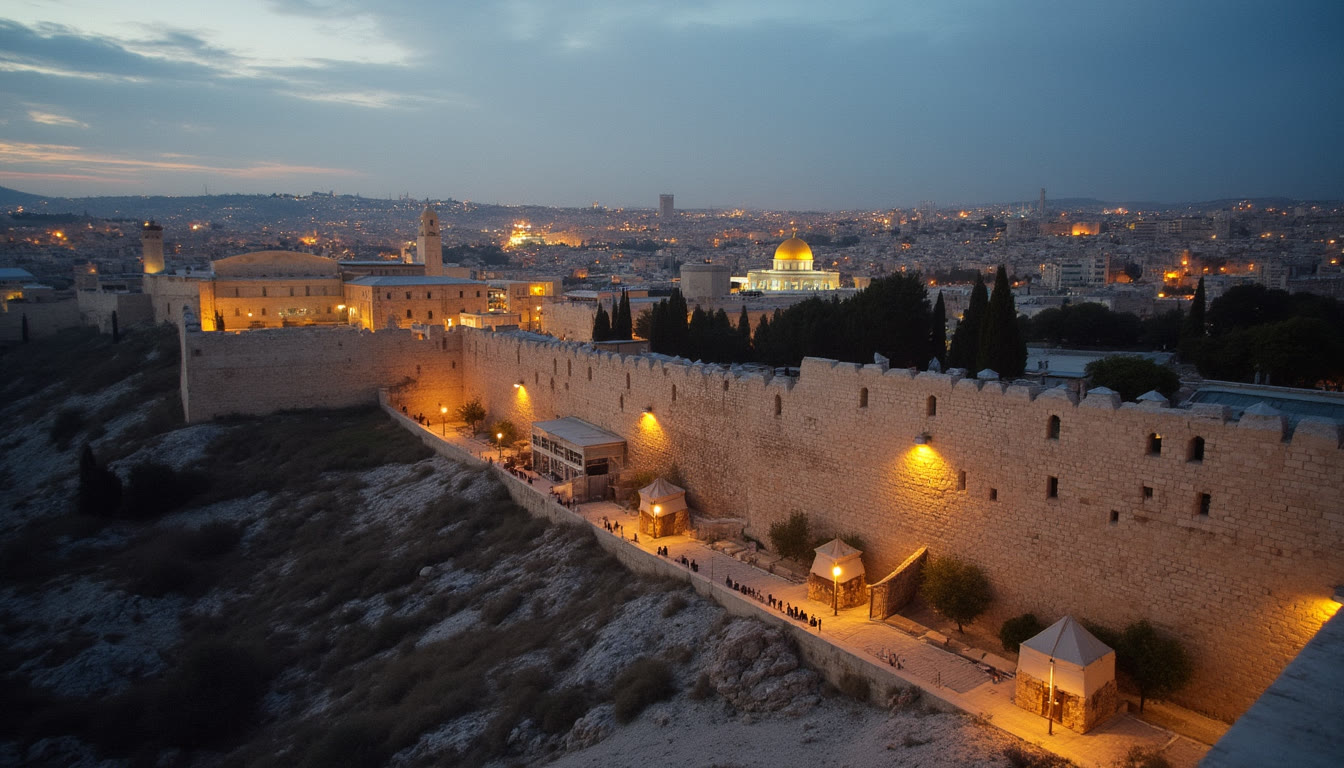
Aerial view of the Old City walls of Jerusalem at dusk

Imminent Closure of the Mission

The UK consulate in East Jerusalem is expected to close on Thursday, 8 October, unless a deal is reached, according to the Israeli government and a spokesperson for Gideon Sa’ar. This follows an order from Israel issued after the UK announced sanctions against illegal settlements in the occupied West Bank. The Israeli government had previously given a 30-day window to close the mission following the announcement of these sanctions.

The mission provides essential services to Palestinians living in Gaza, the West Bank, and East Jerusalem. The Independent reports that there are currently 30 British diplomats and family members based at the facility. This remains separate from the UK embassy in Tel Aviv, which is still operating.

The UK government is currently making a last-ditch effort to prevent the closure of the site. To support this, the UK has asked European countries to raise the matter with Israel in an attempt to reverse the decision. The sanctions being contested by Israel are set to take effect next year.

The potential shutdown would mean that Palestinians in East Jerusalem, the West Bank, and Gaza lose the services provided by the consulate. This would impact the local population who rely on the mission for specific diplomatic and administrative support. This follows our earlier report of 7 October 2026.

Diplomatic Friction and Sanctions

The dispute stems from British sanctions which will target companies and individuals that provide services for the expansion of settlements. Additionally, the sanctions will include a ban on trade in goods originating from these settlements. The UK cited rising settler attacks and Israeli-backed expansion as the reasons for implementing these measures.

Tensions have escalated as the Israeli government has accused the UK's Labour party of being hostile towards Israel. Gideon Sa’ar has also accused London of trying to interfere in the Israeli general election. These accusations come as the diplomatic relationship faces pressure.

The UK is reportedly considering a retaliatory response involving the expulsion of Israeli diplomats from London. According to Israeli media, there are 27 Israeli diplomats that the UK may consider expelling. The Foreign Office has declined to comment on any speculation regarding the potential expulsion of these officials.

The current situation leaves open questions regarding how rapidly Britain would move to expel diplomats if the facility closes. The speed of any retaliatory measures remains an area of uncertainty as the diplomatic standoff continues between the two nations.

A Long History in Jerusalem

The consulate has maintained a presence in Jerusalem for almost 200 years, with BBC News noting it was first established in 1838. The UK government purchased the plot for the consulate in 1963 during a period when East Jerusalem was under Jordanian control. Following changes in the region, the consulate moved to the Sheikh Jarrah neighbourhood in 1967, according to The Guardian.

The UK's position on the territory remains complex, as the government does not recognise Jerusalem as being under the control of any single country. This stance follows the UK's decision to recognise the State of Palestine last year. The mission's location in Sheikh Jarrah has been a point of focus for decades.

The site has deep historical roots, with its presence in the region spanning nearly two centuries. The movement of the consulate to its current neighbourhood in 1967 marked a significant chapter in its long-standing operations. The UK's historical involvement in the area is reflected in its continued presence through various political shifts.

The potential loss of the mission could have wide-ranging effects for the local population. If the consulate closes, Palestinians in East Jerusalem, the West Bank, and Gaza would lose the specific services provided by the facility. This would alter the way the UK engages with these communities directly.

Failed Talks and Regional Responses

Efforts to resolve the crisis through direct dialogue have so far been unsuccessful. Reuters reports that the UK National Security Adviser, Jonathan Powell, visited Israel last week to conduct talks, but no agreement was reached. This failure to find common ground leaves the Thursday deadline looming.

The UK's actions have not been unique, as France and Canada also announced sanctions. However, Israel has not taken any retaliatory action against these other nations. This distinction has added a layer of complexity to the specific dispute between London and Jerusalem.

Amjad Iraqi, who serves as a senior analyst on Israel and Palestine for the International Crisis Group, suggested the move targets Palestinian support. He said, "It’s quite telling that the Israeli government response was primarily about blocking the UK’s ability to support Palestinians, rather than the core of UK-Israeli relations themselves".

Iraqi also noted the impact on the local population regarding the diplomatic strategy. He said, "For [the Israeli] foreign minister, Gideon Sa’ar, the response is low-cost, in their minds it’s just Palestinians bearing the cost".
Uncertainty Over Future Relations

As the deadline approaches, questions remain regarding the speed of the UK's response if the facility is shut. It is unclear how rapidly Britain would move to expel diplomats if the consulate is forced to close. The situation remains fluid as both governments continue their respective positions.

The impact on the diplomatic corps is a growing concern for those monitoring the situation. With 30 staff members currently at the mission, a closure would represent a disruption to British operations in the region. The distinction between the East Jerusalem mission and the Tel Aviv embassy remains a key factor in the UK's regional strategy.

The UK continues to attempt to persuade Israel not to proceed with the closure of the mission. All eyes are now on whether any last-minute diplomatic breakthroughs can be achieved before the scheduled deadline on Thursday.

The diplomatic relationship between the two countries faces a period of intense scrutiny. Whether the mission remains open or is forced to shut will likely depend on the success of ongoing international efforts to mediate the dispute.