Hackers have targeted refrigeration software at several major French supermarket chains, causing temperatures to rise and spoiling food supplies. The Paris prosecutor's office has launched a cyber-crime investigation into the incident, which affected hundreds of stores. European officials say the weaponisation of food has become a reality as the scale of the breach is assessed.

A major cyber-attack has targeted the refrigeration software of several large supermarket chains in France, leading to widespread food spoilage. Hackers managed to gain control of systems used to manage temperatures remotely, causing units to heat up across hundreds of locations. The Paris prosecutor's office described the event as a large-scale attack affecting significant food retailers.
Individual chains have reported various levels of impact across the country. Carrefour stated that 80 of its 6,000 stores were hacked, while Monoprix reported that 5% of its more than 400 shops were hit. According to BBC News, approximately 400 stores in total have been affected across France by the breach.
The Mousquetaires Group, which owns Netto and Intermarché, has been heavily impacted. Les Mousquetaires reported that 150 Intermarché stores were hit by the incident. To prevent further attacks from occurring, the group disconnected 100 shops from the internet, according to BBC News.
The scale of the disruption has caused operational issues for many retailers. The Mousquetaires Group stated that some units used for displaying food were not functioning on the afternoon of Monday 5 October. The attack has not only caused food losses but has also resulted in small fires in some instances.
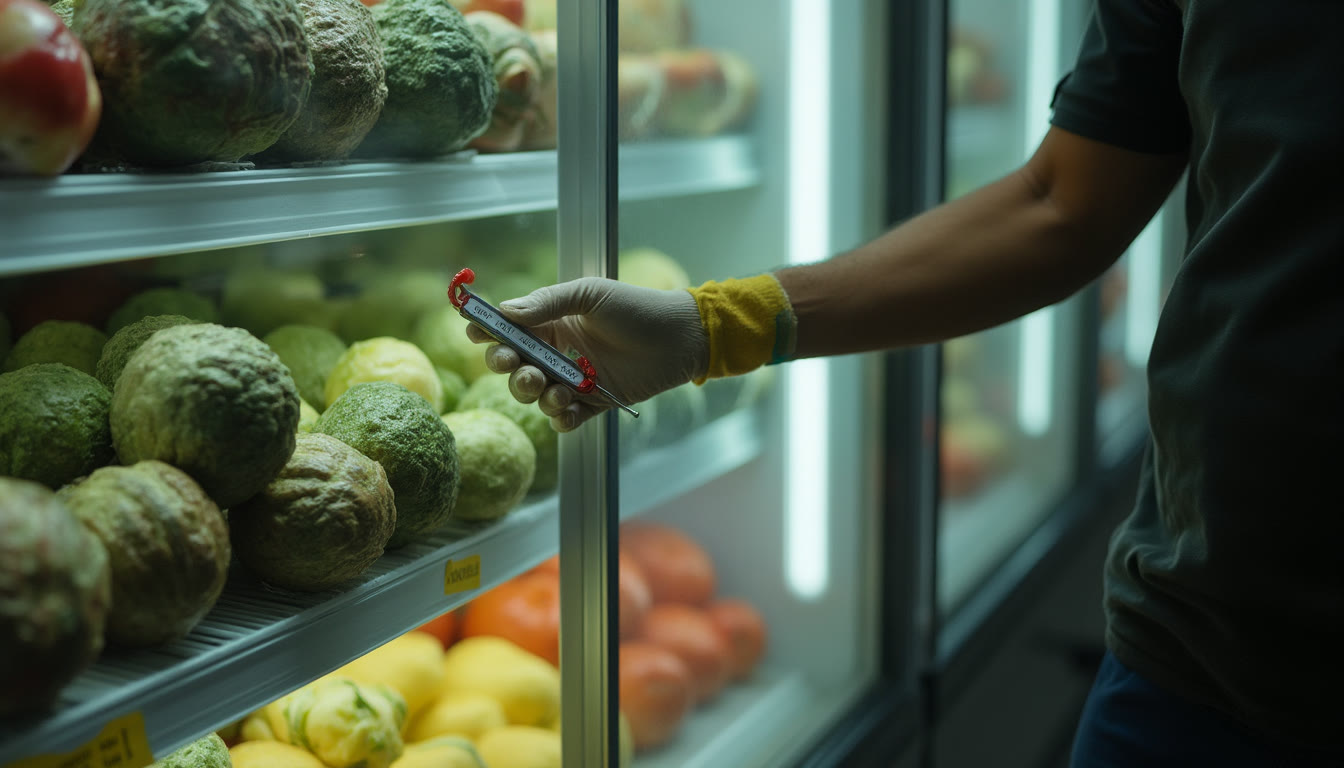
The breach caused refrigeration and freezer units to reach dangerous levels. Intermarché reported that fridges heated to 50C for a period of six hours overnight into Monday 5 October. This extreme heat led to the loss of fresh products and various other damages.
Coopérative U has also been a target of the digital intrusion. BBC News reports that 100 Coopérative U supermarkets were targeted during the attack. The impact on these stores has been described in very serious terms by the retailer.
Dominique Schelcher, chief executive of Coopérative U, spoke about the severity of the situation. "Targeting equipment essential to the preservation of fresh products and to the food supply of the French people is of extreme gravity and is unprecedented", said Dominique Schelcher, chief executive of Coopérative U.
The financial impact of the spoiled goods is already being measured in certain areas. BFMTV reported that two supermarkets in the Alsace region suffered losses of €270,000. BBC News stated that these losses amounted to £228,000 for the two stores in that region.
The attack specifically targeted software provided by the Danish engineering firm Danfoss. This software is used by retailers to manage the temperature of their refrigeration units remotely. The hackers were able to exploit the system to manipulate these settings.
Danfoss has commented on the nature of the affected hardware. The company stated that the units involved were older models which possessed outdated firmware. This meant the devices could not be updated to fix a known risk.
The firm has expressed its intention to assist those impacted by the breach. "Reliable refrigeration is critical to our customers' operations, and we remain committed to supporting our customers and helping them maintain secure and reliable systems they are used to", said Danfoss.
This incident follows previous advice regarding system maintenance. Danfoss had previously advised businesses to ensure that all supported systems were kept up to date to avoid such risks.
The incident has raised alarms regarding food security across the continent. European Food Commissioner Christophe Hansen noted that the situation highlights new dangers for the food supply chain. He suggested that the nature of such attacks has changed.
The Commissioner expressed concern regarding the motives and methods behind the breach. "Food security requires more attention at all levels. Because the weaponisation of food has become a reality", said Christophe Hansen, European Food Commissioner.
Other European retailers have reported technical difficulties, though links to the French attack are not yet proven. Ahold Delhaize reported a security issue within its network, but it remains unconfirmed if this is related to the French incident. The Dutch chain Albert Heijn also experienced problems with its electronic price tags, delivery system, and online app.
The security of critical infrastructure remains a high priority in France. Last month, President Emmanuel Macron ordered measures to protect the nation's critical infrastructure from hybrid attacks attributed to Russia.
French authorities are now taking steps to address the breach and identify those responsible. The French prime minister, Sébastien Lecornu, has instructed the national cybersecurity agency, ANSSI, to investigate the vulnerability. This move is intended to determine how the software was compromised.
A formal criminal inquiry is also underway to pursue the hackers. French prosecutors have opened a cyber-crime investigation into the incident. The investigation will look into the scale of the attack and the potential motives of the perpetrators.
The government is also working with other nations to monitor the situation. France is currently coordinating with its European counterparts to determine if other countries have been affected by similar tactics. This cooperation is intended to bolster regional food security.
While the full scale of the attack remains unclear, the investigation continues. The work of ANSSI and the prosecutor's office will be central to understanding the technical failings that allowed the breach to occur.
Answers are written by AI and may be wrong - for anything important, use the contact page.